A car’s paint plays a crucial role in defining its overall appearance. Over time, however, exposure to dust, pollution, sunlight and improper washing techniques can damage the paint surface. Many vehicle owners notice swirl marks, light scratches, oxidation and dullness developing gradually. These imperfections make even a well-maintained vehicle look older than it actually is.
This is where The Paint Correction Process at GlossZilla: Bringing Back Your Car’s Shine becomes highly valuable. Paint correction is a professional detailing procedure designed to remove surface defects from the car’s paintwork and restore its original shine. Unlike ordinary polishing or waxing, paint correction focuses on removing imperfections rather than temporarily hiding them.
At GlossZilla Car Detailing Studio, trained technicians use advanced tools, professional compounds and specialized polishing techniques to revive the vehicle’s paint surface. The process requires precision, experience and careful attention to detail because automotive paint layers are delicate. Removing defects while preserving the clear coat requires both expertise and the right equipment.
Paint correction is particularly beneficial for cars that have developed swirl marks due to improper washing methods, automatic car wash brushes or harsh environmental conditions. In cities with high dust levels and pollution, such as many urban areas, paint deterioration can happen faster than expected. A professional paint correction service helps restore clarity, depth and gloss to the paint surface.
Understanding The Paint Correction Process at GlossZilla: Bringing Back Your Car’s Shine allows car owners to appreciate the science and skill involved in professional detailing. By following a structured multi-step approach, experts can significantly improve the vehicle’s appearance and bring back that showroom-like finish that many drivers love.
Understanding Paint Correction and Why It Matters
Paint correction is often misunderstood as simple polishing, but the two processes are quite different. Polishing may improve shine temporarily, while paint correction focuses on removing defects from the clear coat layer of the paint. This difference makes paint correction one of the most effective ways to restore a vehicle’s exterior.
Modern automotive paint typically consists of multiple layers. These layers include a primer, a base coat that provides the color and a clear coat that protects the paint and provides gloss. Most scratches and swirl marks occur within the clear coat layer. Paint correction works by carefully leveling this layer to remove imperfections without damaging the paint structure.
What Causes Paint Defects
Several factors contribute to paint defects over time. One of the most common causes is improper washing techniques. Using dirty cloths, rough sponges or automated car wash brushes can create swirl marks that gradually accumulate on the paint surface.
Environmental contamination is another major factor. Dust particles, road grime, bird droppings and tree sap can bond with the paint and create stains or etching. When these contaminants remain on the surface for long periods, they can cause permanent marks.
Ultraviolet radiation from sunlight also contributes to paint damage. Over time, UV rays cause oxidation, which results in faded paint and loss of gloss. Vehicles parked outdoors for extended periods often experience this issue more frequently.
Why Professional Paint Correction is Important
Professional paint correction requires specialized machines, compounds and polishing pads. Attempting the process without proper knowledge can damage the paint surface permanently.
Detailing experts analyze the paint thickness and condition before starting the correction process. This ensures that only the required amount of clear coat is removed while eliminating imperfections effectively.
Professionally corrected paint reflects light more evenly, which significantly improves gloss and depth. As a result, the vehicle appears newer, cleaner and more attractive.
The Paint Correction Process at GlossZilla: Bringing Back Your Car’s Shine
The success of The Paint Correction Process at GlossZilla: Bringing Back Your Car’s Shine lies in its structured multi-step approach. Each stage plays a critical role in preparing the surface, removing defects, and restoring shine.
Step 1: Professional Inspection
The process begins with a thorough inspection of the vehicle’s paint surface. Detailers use special lighting to identify swirl marks, scratches oxidation, and other imperfections.
Paint thickness gauges are sometimes used to determine how much clear coat is available for correction. This step ensures the process is safe and effective.
Step 2: Deep Exterior Wash
Before any correction work begins, the vehicle undergoes a detailed exterior wash. This removes dirt, dust, grease and loose contaminants.
Using professional car shampoos and soft microfiber wash mitts ensures the surface is cleaned without creating additional scratches.
Step 3: Clay Bar Treatment
Even after washing, microscopic contaminants often remain embedded in the paint. A clay bar treatment removes these particles and leaves the surface perfectly smooth.
Clay bars pull out contaminants such as industrial fallout, brake dust and stubborn dirt particles that regular washing cannot remove.
Step 4: Machine Compounding
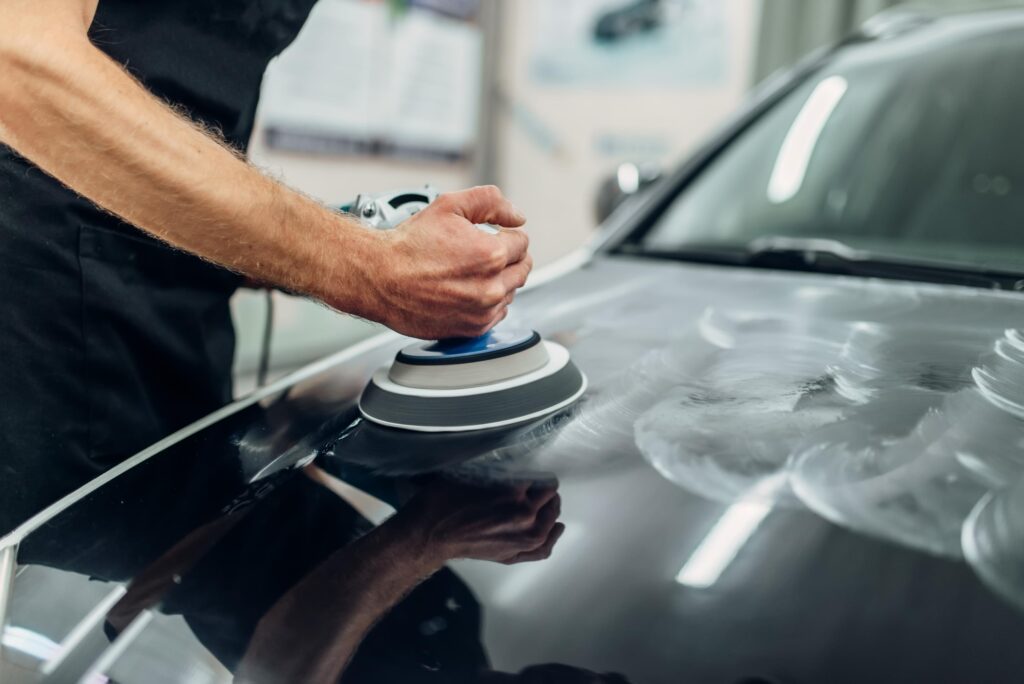
Machine compounding is where the real correction begins. A cutting compound and machine polisher are used to remove deeper scratches and swirl marks.
This stage levels the paint surface by removing tiny layers of the clear coat. Precision and skill are essential during this step to avoid over-polishing.
Step 5: Precision Polishing
After compounding, the surface may appear slightly hazy. Precision polishing restores clarity and enhances the paint’s gloss.
Polishing removes fine micro-scratches left by the compounding stage and improves the paint’s reflective properties.
Step 6: Surface Protection
Once the correction is complete, protective products such as ceramic coatings or paint sealants are applied. These coatings protect the newly corrected surface from contaminants, UV rays and water spots.
Ceramic coatings also enhance shine and make future cleaning easier.
Step 7: Final Quality Inspection
The final stage involves inspecting the vehicle under specialized lighting to ensure that the correction work meets professional standards.
Any remaining imperfections are addressed before the vehicle is delivered to the customer.
Benefits of Professional Paint Correction
Paint correction offers several advantages beyond improving appearance.
| Benefit | Explanation |
|---|---|
| Restores original gloss | Removes swirl marks and dullness |
| Improves resale value | Well-maintained paint increases market value |
| Enhances paint clarity | Removes micro scratches |
| Prepares surface for ceramic coating | Ideal base for protective coatings |
A professionally corrected car often looks dramatically different from its original condition.
Paint Correction vs Regular Car Polishing
Many car owners confuse polishing with paint correction. However, the two services differ significantly.
| Feature | Paint Correction | Regular Polishing |
|---|---|---|
| Removes scratches | Yes | Mostly hides them |
| Improves clarity | High | Moderate |
| Time required | Several hours | 1–2 hours |
| Skill level required | Professional | Basic |
For a detailed explanation of professional car detailing methods, visit:
https://www.autogeekonline.net
How Often Should Paint Correction Be Done
Paint correction is not something that needs to be done frequently. In most cases, once every few years is sufficient.
However, the exact frequency depends on several factors including driving conditions, washing habits and environmental exposure.
Cars protected with ceramic coatings usually maintain their corrected finish for a longer time.
Tips to Maintain Your Car’s Shine After Correction
Maintaining the results of The Paint Correction Process at GlossZilla: Bringing Back Your Car’s Shine requires proper care.
Some essential maintenance tips include:
Wash the car using the two-bucket method
Use microfiber towels for drying
Avoid automatic brush car washes
Apply protective wax or sealant regularly
Park the vehicle in shaded areas when possible
Following these practices helps maintain the glossy finish for a long time.
Frequently Asked Questions
1. How long does paint correction take?
Depending on the condition of the paint, the process may take anywhere from 6 to 15 hours.
2. Will paint correction remove deep scratches?
Light to moderate scratches can be removed. Deep scratches may require repainting.
3. Is paint correction safe for all vehicles?
Yes, when performed by trained professionals using proper equipment.
4. Can paint correction increase resale value?
Yes. A well-maintained exterior significantly improves vehicle appearance and resale value.
5. Should ceramic coating be applied after paint correction?
Yes. Ceramic coating protects the corrected paint and preserves shine.
6. How long do paint correction results last?
With proper care, the results can last several years.
Conclusion
The exterior of a car is constantly exposed to environmental elements that gradually damage its paint surface. Swirl marks, oxidation and scratches can make even a relatively new vehicle look dull and neglected.
The Paint Correction Process at GlossZilla: Bringing Back Your Car’s Shine provides a professional solution to restore the vehicle’s appearance. Through careful inspection, advanced polishing techniques, and protective coatings, the paint can regain its original depth and clarity.
When performed by skilled professionals, paint correction transforms the vehicle’s look dramatically. For car owners who value appearance and long-term paint protection, investing in professional paint correction is one of the best decisions for maintaining a vehicle’s beauty and value.